Stage 1 Fire Restrictions in effect for unincorporated plains areas east of Hwy 93, Broadway, and US 36.

Pets and Animals

Pets and Animals

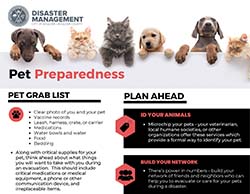
Household Pets

When preparing household pets for disasters, consider the following:

  • Have a plan for how you’ll evacuate your pets.
  • Make sure you have necessary leashes, collars, harnesses, crates, or other transportation devices that keep them safe.
  • Remember, pets get stressed just like we do. Your pet may behave differently during disaster – so make sure to take extra precautions. If your pet does not normally run away, hide, bite, etc. remember that their typical behavior may change while they’re under the stress of a disaster.

Pet Emergency Kit

  • Leash and Collar/Harness
  • Crate
  • Food
  • Water
  • Proof of ownership
  • Clear photo of animal
  • Medical records
  • Veterinarian contact information

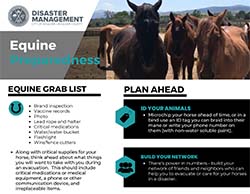
Large Animals

When preparing large animals for evacuation consider the following:

  • Practice loading animals well in advance to make the evacuation process easier on you both.
  • Microchip your animals.
  • Make connections ahead of time to help you load and transport large animals.
  • In the moment, assess the situation, your skill set, and your animals to determine if you can trailer them, or if you may need to shift to a backup option.
    • In the event that you cannot get your animal evacuated using a trailer or other planned method, consider cutting fencing to let them get out of harm’s way. If you need to let animals loose, be sure to:
    • Close barn/enclosure doors – stressed animals may go back to places that feel familiar, which can put them in harm’s way.
    • Cut fencing at corners, as animals will find this spot easier than a fence that is cut in the middle.
    • Large animals that are found loose are picked up and taken to the Boulder County Fairgrounds for reunification with owners.
    • The Boulder County Fairgrounds is typically the evacuation location for large animals and livestock.

Animal Emergency Kit

  • Halter and lead rope
  • Trailer or other method of transport (or access and pre-planning with someone who has one)
  • Food
  • Water
  • Proof of ownership
  • Medical records
  • Clear photo of animal that shows any distinctive markings
  • Veterinarian contact information